When I wrote about Love Valley and shared the post on X a few weeks ago, I figured I’d get a few comments about the horses. Maybe somebody would tell me they went on a trail ride there as a kid or share a memory like mine.
Instead, my comments and inbox turned into a family reunion.
Y’all came out of the woodwork talking about one weekend in the summer of 1970—a weekend I’d barely mentioned. It was one sentence tucked into the middle of the post, and apparently, that one sentence was the part half of y’all had been waiting on.
I loved reading every single story.
I’ll also admit…
I got a little jealous.
I’m a die-hard Allman Brothers fan. And I don’t mean the, “Oh yeah, I like Ramblin’ Man” kind of fan. I mean, I made a pilgrimage to Rose Hill Cemetery in Macon just to stand at Duane and Gregg Allman’s graves.
So the idea that some of y’all got to see that band—young, hungry, and still figuring out they were about to change Southern rock forever—in a cow pasture in the Brushy Mountains?
I’d trade a Sunday dinner at Mamaw and Papaw’s house for that experience.
Maybe dessert, too.
So let’s give that weekend the attention it deserves.
Let’s talk about the time a tiny North Carolina town of about a hundred people accidentally became the South’s answer to Woodstock.

Andy Barker didn’t build Love Valley to host a rock festival.
He built it because he loved the Old West.
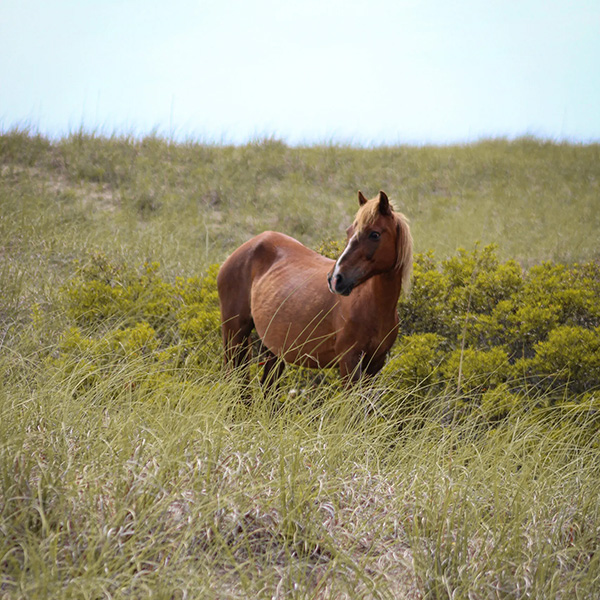
He wanted dirt streets instead of pavement, hitching posts instead of parking meters, horses instead of cars. A church. A saloon. A rodeo arena. The cowboy town he’d dreamed about since he was a boy growing up in Charlotte.
By 1970, Love Valley had already become a destination for trail rides and rodeos. So when organizers announced a music festival for July 16 through 19, they figured they might draw somewhere between 25,000 and 50,000 people.
Five dollars bought you the whole weekend.
That sounded ambitious enough.
Then everybody showed up.
Depending on whose numbers you believe, somewhere between 75,000 and nearly 200,000 people poured into a town that normally had around a hundred residents.
Just let that sink in for a second.
The roads backed up for miles. Every patch of open ground disappeared beneath tents, sleeping bags, campers, and folks who apparently didn’t mind sleeping wherever they landed. The air filled with dust, patchouli, campfire smoke, and the sound of guitars echoing across the hills.
What amazes me most isn’t the size of the crowd.
It’s that it worked.
By all accounts, it should’ve been chaos. A crowd that big in a town with almost no infrastructure sounds like the beginning of one of those documentaries where everybody says, “Looking back, we probably should’ve known better.”
Instead, it stayed remarkably peaceful.
You had hippies, bikers, music lovers, cowboys, and curious locals wandering the same dirt streets. Bell-bottoms passed hitching posts. Bare feet walked where horses usually did. Somehow the Wild West and the counterculture bumped into each other…and instead of fighting, they kinda tipped their hats and got along.
Only in North Carolina.
That’s what made Love Valley different.
This wasn’t somebody’s farm that happened to host a concert.
It was already a town with its own personality and its own story. The festival didn’t create Love Valley. It just borrowed it for one unforgettable weekend.
And the music wasn’t exactly hurting, either.
The Allman Brothers Band was still in its infancy. Their first album was out, Idlewild South was still on the horizon, and they played multiple sets over the course of the festival.
People who were there still talk about those performances.
Long, improvisational jams. Early versions of songs that would become classics. The kind of shows collectors are still chasing on bootleg recordings more than fifty years later.
They weren’t the only draw.
Big Brother and the Holding Company—without Janis—played alongside Wet Willie, Tony Joe White, the Hampton Grease Band, Johnny Jenkins, and dozens of regional acts. The music rolled out from the natural amphitheater around the rodeo arena while people stretched across the surrounding hillsides under the July sky.
It must’ve been something to see.
That weekend proved something.
It proved the counterculture had made it all the way to the North Carolina mountains. It proved a gathering that massive didn’t have to end in violence or disaster. And it gave the Allman Brothers another stepping stone on their way to becoming one of the greatest Southern rock bands of all time.
Then, almost as quickly as it came, it was over.
Love Valley went back to being Love Valley—a little cowboy town where horses still outnumber cars.
But that weekend never really disappeared.
It lives on in faded photographs, scratchy bootleg recordings, newspaper clippings…and, as I found out, in the memories of the people lucky enough to have been there.
So thank y’all for sharing those memories with me.
I loved every one of them.
I’m still jealous.
And unless somebody invents a time machine, I reckon I always will be.